
Source: MIH Journal, Issue 5, Cover Story
Perspective of the Complete Vehicle Manufacturer: Master Bus’s Integrated Engineering Approach
If we bring the discussion of structural proportions into the actual operating field, commercial electric buses are the most direct verification scenario. Master Bus is a company specializing in the manufacturing of electric buses. Hung Cheng-hsien, the vice general manager of the product planning division of Master Bus, explained that after extending its experience from diesel bus chassis and vehicle assembly into electric bus development, the core focus of structural design is no longer simply load-bearing. Instead, it must simultaneously address battery weight, passenger space requirements, and long-term durability under high-frequency operating conditions.
One of the most significant challenges comes from the Lithium-Titanate Oxide (LTO) batteries used in fast-charging systems. These batteries offer high safety, long life cycle, and rapid charging capabilities, but they are also relatively heavy. A typical 12-meter electric bus generally requires four to five battery packs, creating significant pressure on chassis load capacity, weight distribution between front and rear axle, and overall vehicle center-of-gravity control. As a result, commercial vehicle platforms must incorporate greater structural margins from the earliest design stages rather than simply enlarging existing vehicle size.
The power system further transforms the way the chassis is integrated. For intercity routes that require stable power output during high-speed hill climbing, high-power direct-drive motors make vehicle frame rigidity, cooling pathways, and high-voltage system arrangement become critical design considerations. Master Bus’s recent deployment of a 450 kW six-phase direct-drive motor reflects how commercial vehicle chassis have evolved from passive support structures into integrated platforms for power and thermal management under heavy-load and high-output operating conditions.
On the manufacturing side, the use of segmented welding and modular assembly for large chassis beams also demonstrates the commercial vehicle industry's emphasis on platform scalability. Mr. Hung explained that the objective is not merely to simplify manufacturing but to maintain a consistent primary structure while preserving flexibility for different vehicle lengths, varying supply-chain configurations, and future maintenance or modification requirements. Ultimately, for commercial electric vehicles, the value of structural design must be validated through high-mileage operation: durability, ease of maintenance, and adaptability to diverse route conditions determine whether a platform can truly succeed.
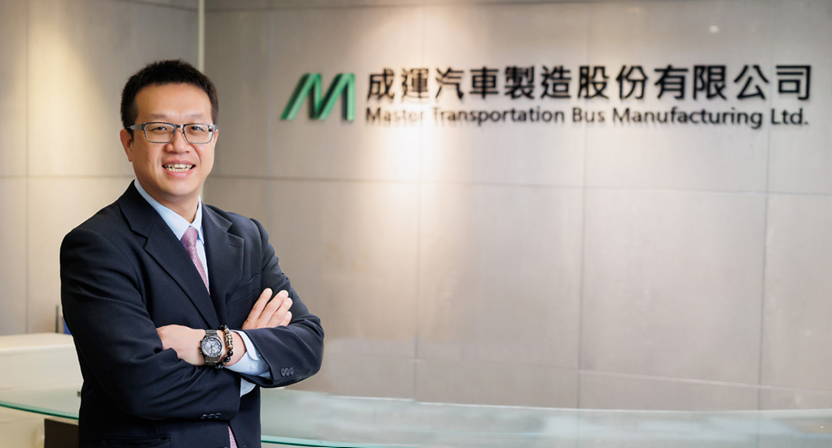
Hung Cheng-hsien, Vice General Mager of Product Planning at Master Bus, noted that electric bus chassis design has evolved from a traditional load-bearing structure into an integrated platform that simultaneously accommodates battery placement, powertrain output, and long-term durability requirements. (Photo by Master Bus)
The Long-Term Challenges of Structural Integration
As the underlying structure of an electric vehicle becomes a scalable foundational capability, its life of design often spans multiple product generations. This means that structural integration not only has to meet current performance requirements but also withstand the long-term pressures brought about by technological evolution and changing operating conditions.
The first challenge is the continuous tightening of safety standards. Side-impact protection and battery safety requirements are becoming increasingly stringent. Structures must provide sufficient energy-absorption zones and rigidity within limited space while avoiding excessive reinforcement that would increase vehicle weight. Since battery modules are high-energy-density components, their protective design and load-path distribution must work in coordination with the vehicle frame to ensure integrity during collision events.
The second challenge is fatigue and material durability. High-mileage operation and repeated load cycles generate cumulative stresses on welds, joints, and secondary structures. Without sufficient design margins, hidden issues may emerge after years of service. Consequently, long-term deformation control and material stability must be carefully evaluated during the design phase.
Finally, technological upgrades may alter packaging requirements. Improvements in battery energy density, increases in charging voltage, or modifications to cooling systems can all affect available chassis space and thermal-management layouts. The challenge of structural integration lies in maintaining sufficient flexibility for future developments, while preserving overall rigidity and weight efficiency. Achieving the right balance between stability and adaptability is ultimately the key to ensuring the long-term success of electrified vehicle structural engineering.
.jpg)
High-power direct-drive central motors have become the core power solution for commercial electric buses. Their high-output characteristics require vehicle frame rigidity, cooling system configuration, and high-voltage system integration to be planned simultaneously from the earliest stages of chassis design. (Photo by Master Bus).
Link to the original article:
Desk
https://www.digitimes.com.tw/seminar/MIH_20260401/desktop.asp
Mobile
https://www.digitimes.com.tw/seminar/MIH_20260401/mobile.asp